
Scientific posters are used in academic spaces where attention is limited and information density is high. They appear at conferences, exhibitions, universities, and research events, where viewers move quickly and decide within seconds whether to stop. An effective scientific poster presents research in a clear visual form, supports fast understanding, and communicates key ideas without overwhelming the reader.
Purpose and communication role of scientific posters
A scientific poster is a communication tool, not a full research document. Its main role is to present the essence of a study in a compact and accessible way. Unlike articles or reports, posters are read standing, often from a distance, and usually without a strict reading order. This physical context strongly affects design decisions.
Posters serve two functions at the same time. First, they attract attention and invite viewers to approach. Second, they explain the core message of the research clearly enough that a reader can understand the main outcome without additional explanation. Because of this, posters must balance visual appeal and scientific accuracy.
The viewer does not expect complete methodological detail. Instead, the viewer looks for the research question, general approach, main results, and conclusions. Posters that try to include everything often fail, because excess information hides the message. Selection and reduction of content is therefore a central design skill.
Visual hierarchy, layout, and first impression
The first impression of a poster forms within seconds. The human eye searches for structure before content. If the structure is unclear, the viewer moves on. Visual hierarchy guides the eye through the poster in a predictable way, starting with the title and moving toward details.
Hierarchy is created through size, spacing, contrast, and alignment. Large elements attract attention first; smaller ones support reading later. Titles must remain readable from several meters away. Section headings guide orientation. Body text provides explanation but should not dominate the layout.
The best layout is one that follows the way people naturally read. Most people look at the screen from the top to the bottom and from the left to the right. Columns are often better at supporting this movement than blocks that are spread out. Clear margins and even spacing help separate ideas and cut down on noise in the picture.
Color influences perception strongly. High contrast between background and text improves readability. Too many colors reduce clarity and distract attention. A limited color palette supports structure and keeps focus on content rather than decoration.
Content reduction and text clarity
 Content reduction is one of the most difficult steps in poster design. Researchers often feel that removing information weakens scientific value. In practice, reduction improves understanding. Posters succeed when they communicate what matters most.
Text must remain concise and direct. Short sentences support scanning. Complex grammar slows reading and increases cognitive load. Posters are not read like books. Readers jump between sections and visuals, so each text block must make sense on its own.
Key content questions help guide reduction. What problem is addressed? Why it matters. What was done. What was found. What it means. Information that does not support these points can usually be removed without harm.
Common elements that deserve space include:
- a clear research objective
- simplified description of methods
- key results supported by visuals
- brief interpretation of findings
This selection keeps the poster focused and readable.
Use of visuals and integration with text
Visual elements are central to poster effectiveness. Graphs, charts, and diagrams communicate faster than paragraphs. They should carry the main results, not serve as decoration. Each visual must have a clear purpose and be understandable without a long explanation.
Labels should remain simple and readable. Overloaded graphs confuse viewers unfamiliar with the dataset. Visual consistency matters. Colors, symbols, and scales should remain uniform across all graphics.
Images should be placed near the text that explains them. When visuals and explanations are separated, comprehension suffers. White space around images improves focus and prevents clutter.
A good mix of text and images keeps people interested. Too much text makes people not want to read. It feels shallow to have too many pictures without any words. The goal is interaction between both elements, where each reinforces the other.
Typography, consistency, and alignment
Typography strongly affects readability. Fonts must be easy to read from a normal distance. Sans serif fonts are often good for posters because they have clean shapes and even spacing.
Font size hierarchy matters more than font choice. Titles must dominate visually. Headings must clearly separate sections. Body text should be large enough to read without leaning forward. Dense text blocks should be avoided.
Consistency creates professionalism. Fonts, colors, heading styles, and spacing must remain uniform across the poster. Inconsistent design signals a lack of structure and distracts attention from content.
Alignment helps the eye move smoothly. Elements aligned along common lines feel connected and organized. Random placement increases visual effort and reduces comprehension.
Accessibility and audience consideration
Scientific posters address diverse audiences. Some viewers share the same specialization. Others come from related fields or different disciplines. Language should remain accurate but accessible.
Excessive jargon reduces clarity. When technical terms are needed, the context around them can help you understand them. There should be a limit on acronyms, and they should be explained when they are used.
Color choices should consider visibility issues. Strong contrast supports readability. Information should not rely on color alone, because some viewers have color perception limitations.
Posters must communicate without sound or interaction. This makes clarity essential. The reader should understand the main message without needing explanation from the author.
Common design problems and preparation for display
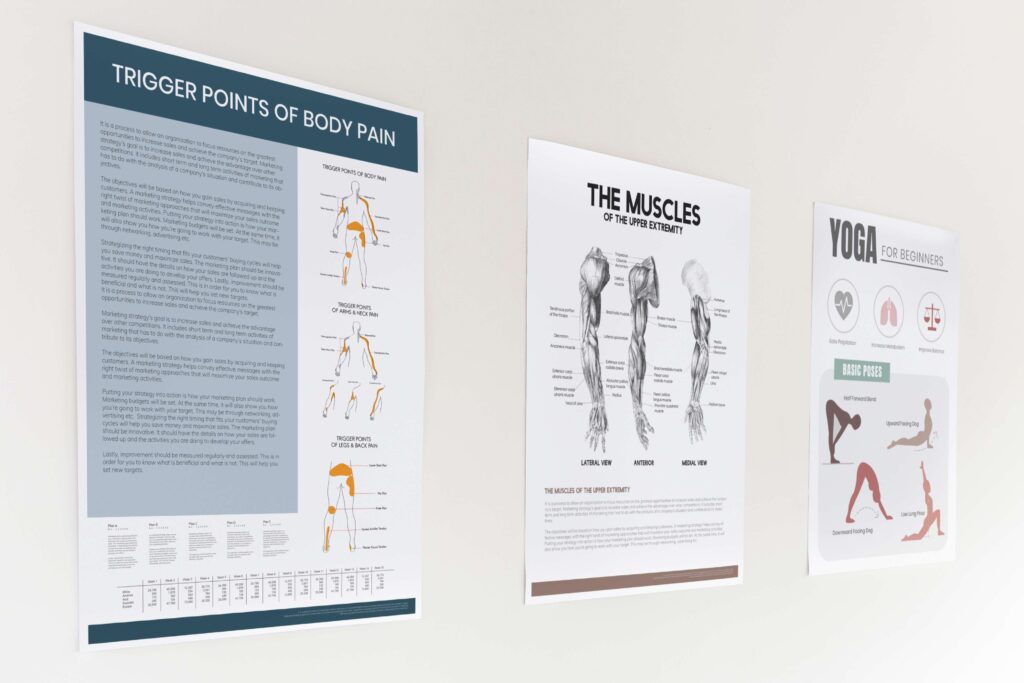
Many posters fail due to predictable issues. Overcrowding remains the most common. Fear of omission leads to walls of text that discourage reading. Weak visual hierarchy makes navigation difficult.
Another frequent problem is unclear conclusions. Data may be shown, but interpretation remains missing. Viewers want to know why results matter and what they suggest.
Technical preparation also matters. Posters must be designed for print size, not screen size. Colors appear differently on paper. Testing a small print sample helps avoid contrast problems.
Image resolution must be high enough for large formats. Blurry graphics reduce credibility. Lighting conditions at display locations also affect readability, so matte finishes often work better than glossy ones.
Scientific posters as a long–term communication skill
Poster design skills extend beyond conferences. The same principles apply to slides, infographics, and reports. Learning to reduce information strengthens analytical thinking and message clarity.
Designing posters teaches prioritization. It forces researchers to identify the core of their work. This process often improves understanding of the research itself.
Scientific posters sit at the intersection of research and visual communication. When done well, they respect data, guide attention, and support knowledge exchange efficiently.
Understanding how to design attractive scientific posters helps research reach its audience in busy academic environments. Clear structure, thoughtful reduction, and visual balance transform complex studies into accessible and engaging presentations.